
Completion requirements
Closes: Friday, 8 July 2050, 11:47 AM
Industrial Pressing Equipments
Industrial Irons
Industrial irons usually work with steam. they have a thermostat which help to regulate the temperature of iron as well as button which allow the steam to pass through during the pressing process. The sole plate of iron has to have good gliding characteristics for gentle pressing especially for delicate fabrics. The protective metallic sheet above the soleplate protects the worker to accidently touch to avoid injury.
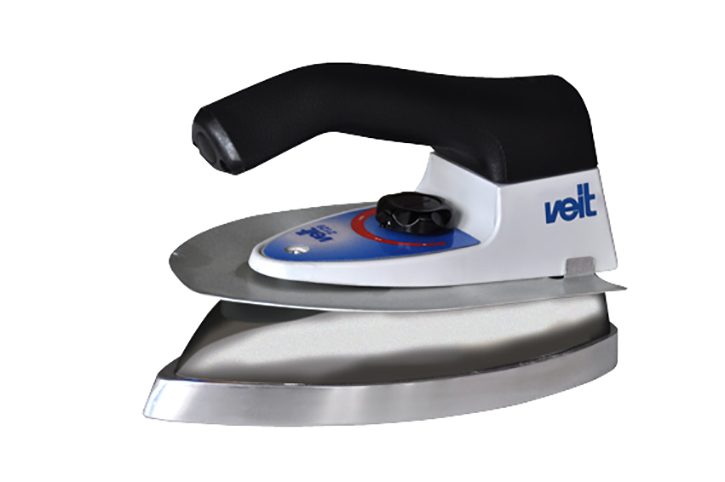
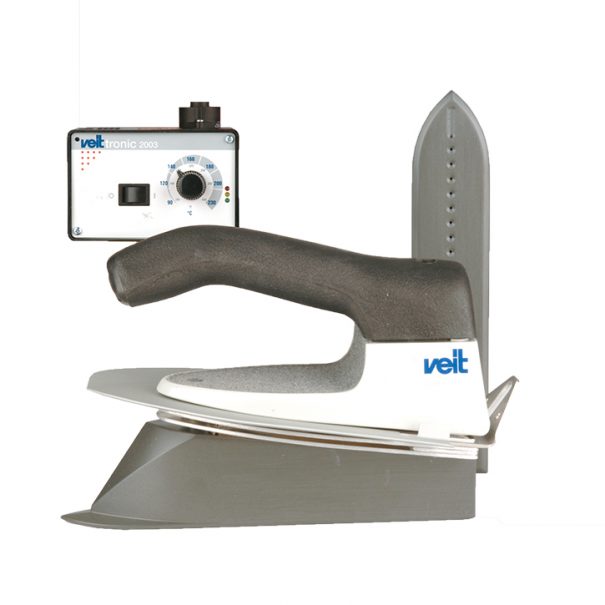
Industrial steam irons also come in various shape and forms as per the operational requirements. The example below shows an industrial steam iron which is especially designed for underpressing of seams. The small soleplate requires lesser time and energy to heat up. Due to smaller soleplate size the weight is also less which reduces the fatigue of worker.
Ironing tables are extensively used in apparel production for pressing purposes. They come in various forms and shapes as per the requirement of the garment. An ironing table has the following important features.
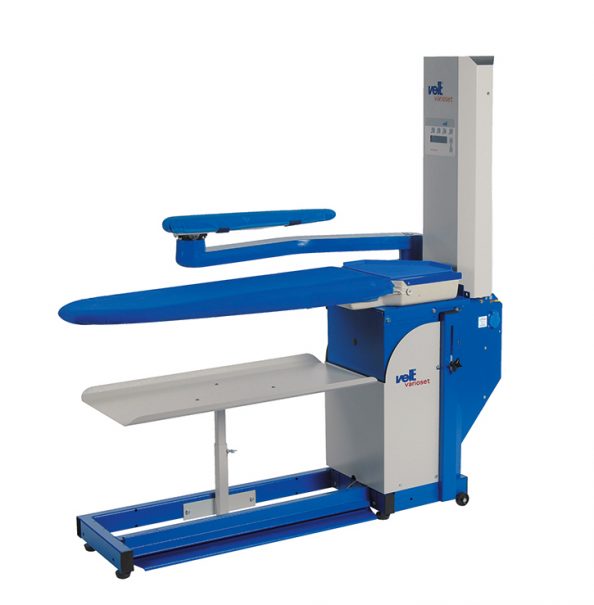
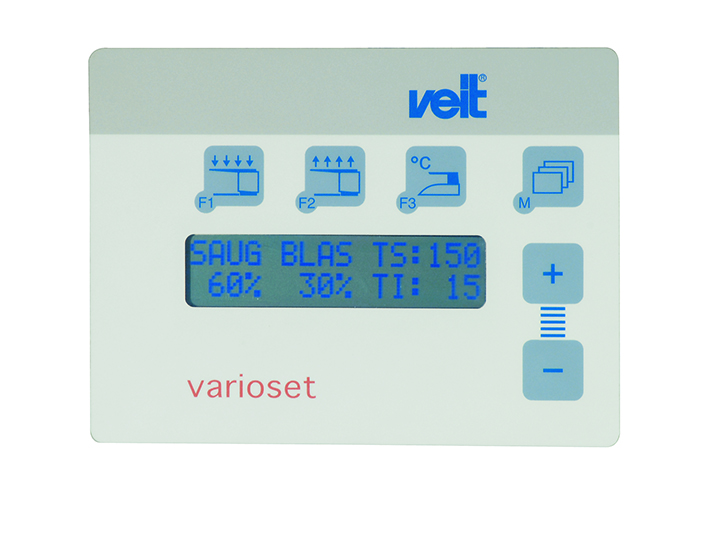
During the ironing process on the table, only one hand of the operator is available for material handling. The other hand is for holding the iron itself. When performing tasks like under pressing operations, like preparation of small parts like pockets, collars, etc, it is important that the small parts lay firm on the surface so that the ironing can be performed. The suction helps to keep the part firm on the ironing surface and the operator can handle the fabric relatively easily with one hand.
The blowing system is used to cool down the fabric as quickly as possible because a dry garment can retain its shape.
The selection between suction/blowing can be managed by the operator or with an electronic system. the ironing table can come in either in suction/blow system individually or as a combination of both.
The table surface of an ironing table is composed of different layers.
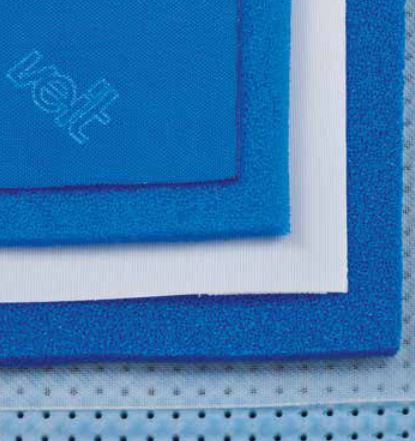
- Top surface fabric -> It is made of manmade material and has long life and can bear temperature of up to 230° C for temporary exposure
- Medium foam Surface -> This is a foamy surface which may have a thickness between 5-10 mm.
- Balancing fabric -> The balancing fabric has an important function to perform. It make sure that condensing droplets are well distributed and thus reduces the moisture content in table cover system.
- Primary padding surface -> This surface provides good suction and blowing performance for longer period of time. It may be made of silicon or foam. Its main function is to distribute the air current evenly through the pressing surface of ironing table.
- Pressing surface -> It is the perforated plate/mould which make the foundation of whole pressing system. As the steam also passes through the pressing table, therefore they must have to have good corrosion resistance. The perforated surface also allow the even distribution of suction and blowing function.
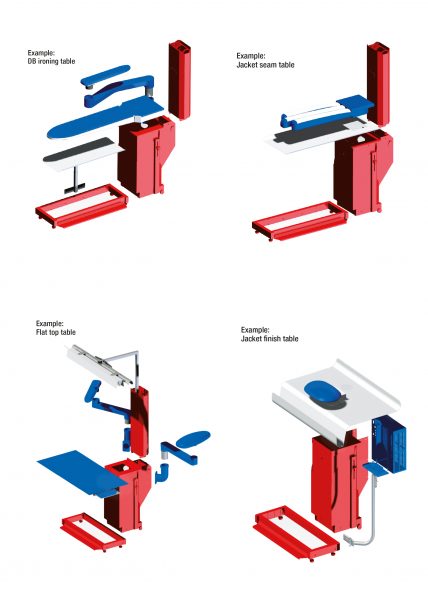
In an apparel production line, garments of various styles are manufactured. Every style may have different types of pressing requirements, therefore a standard shape of the table may not be very productive and efficient. The following example shows a building block system of the pressing table where elements marked in red can always be reused, no matter if you need a flat top table, a DB table, or special ironing tables. A quick adpataion according to production needs is possible.
The finishing equipment can process the whole garment in one pressing. There might be some parts like collars and cuffs need some extra treatment. But these finishing equipment are flexible and can be adjusted according to the size of garment. After putting onto the form, they are inflated and steam is passed through the garment for time required as per garment/fabric requirement. After passing of steam, cool air is passed through the garment to cool them down. The air/steam volume can be regulated as well.
Multiform Finisher
Multiform finihsers offer finishing in all sizes. The parameters can be set exactly for optimized finishing. The width of shoulder, back length, and hem sizes are adjustable. The quantity of air can also be adjusted as per the requirements of garment material. A finisher can produce high quality finishing upto 80 pcs/hour.
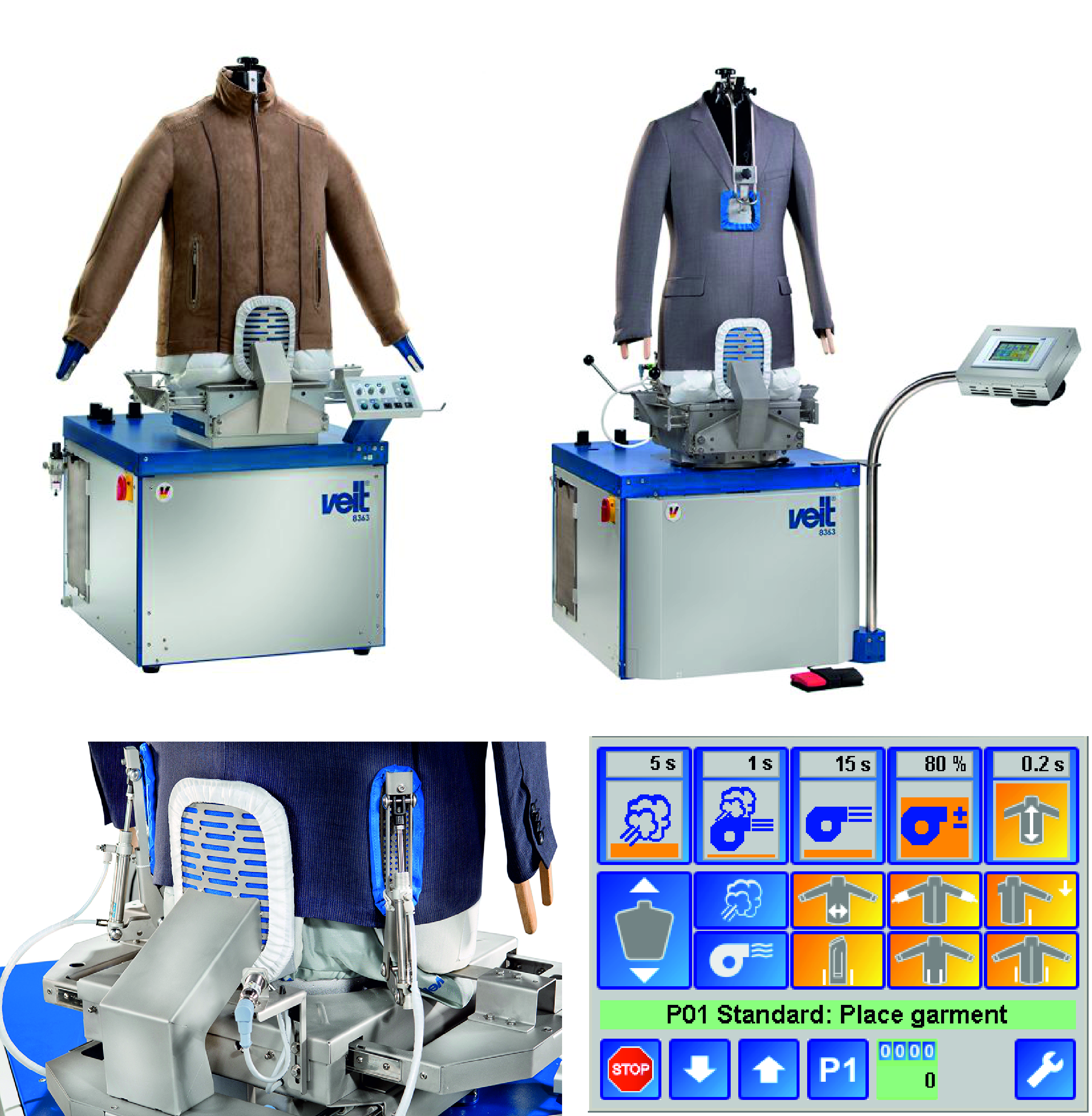
Multiform finisher
The video above shows the step by step mounting and functioning of multiform finisher of different sizes.
For the finshing of garments in mass production, Tunnel Finisher offers a highly automated solution for finishing textiles. It is suitable for textile materials including of natural fibres. The system performs highly at, among others, textile logistics and refinishing companies, mail order companies as well as for garment manufacturers and medical companies. Latest tunnel finsihers can go upto an hourly performance of about 2500 pieces and allow a wide variety of individual applications.
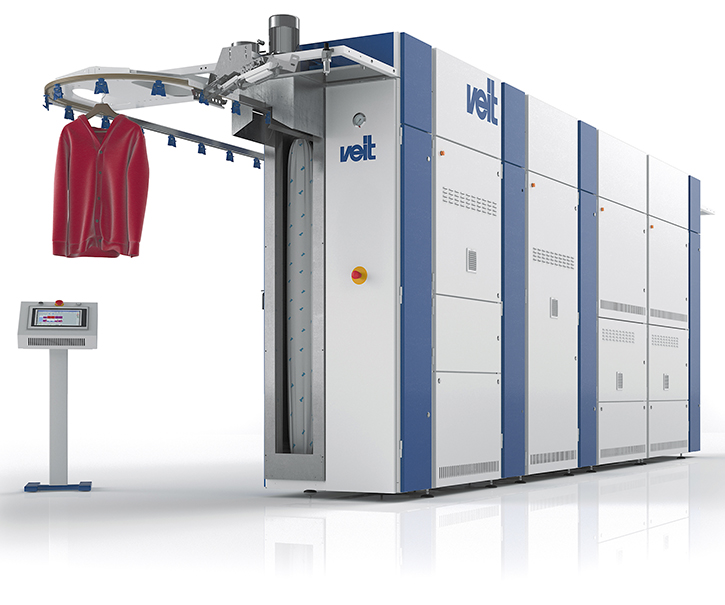
Tunnel Finisher
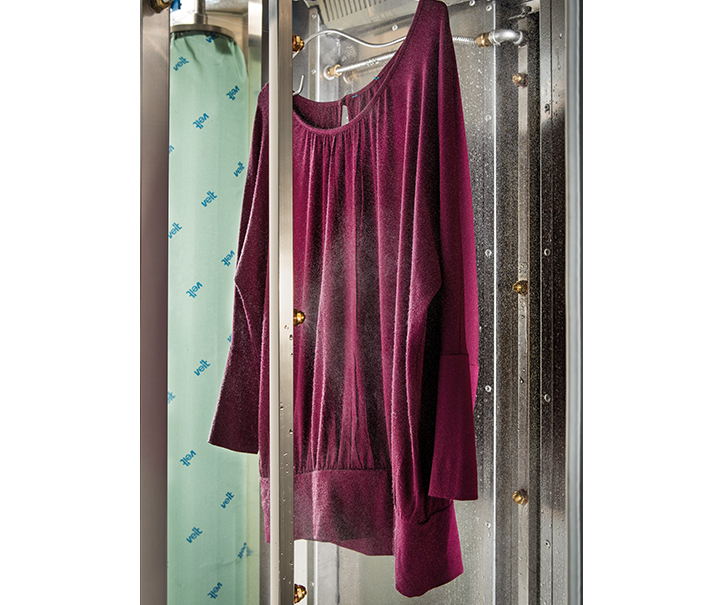
Water sprinkling on garments
Advantages:
- Safe transport of the goods with the conveyor
- No condensation of vapours at conveyor prevents the formation of drops or stains on the garment
- Clearly separated processes: With roller unit between preconditioning and finish
- Consistent finishing quality for any material thanks to the adjustable level of humidity in the spraying steam
- High blowing power: The new generation of blowers is highly effi cient and energy-saving, with minimum noise emission
- Optimized finishing result: the extended air module increases performance
- Maintenance-free chain tensioning system: The pneumatic transport hook system is nearly free from wear and tear
- Impressive steam doll effect: The high-volume exit module adds extra volume to the garment
- Adjustable separation between steam and air module avoids marks on the goods during the finishing process
- Lower part of steam unit can be switched off when finishing basic garments. Yet another energy-saving feature
- Finishing process visualized: The modern touch display can be flexibly positioned.
- Steam Module
- Air Module
- Cotton care module
- Exit Module