
Completion requirements
Closes: Friday, 1 July 2050, 4:33 PM
History of Sewing
Sewing is a widely used joining method to combine flexible textile materials together. Historically, sewing was carried out with hand needles for thousands of years until 1790, when the first sewing machine patent was granted. During the 19th century, the sewing machine was claimed by various inventors, and controversies were surfaced between them about its copyrights. The innovations in sewing technology in the 20th century with ever-increasing sewing speeds led to the realization of mass production for the clothing industry. The industrial sewing machine became more robust and specialized industrial versions are capable of working at much higher sewing speeds compared to their earlier versions. The combination of advanced automation technology and higher sewing speeds are utilized for mass production of goods and have reduced the intensive labor work.
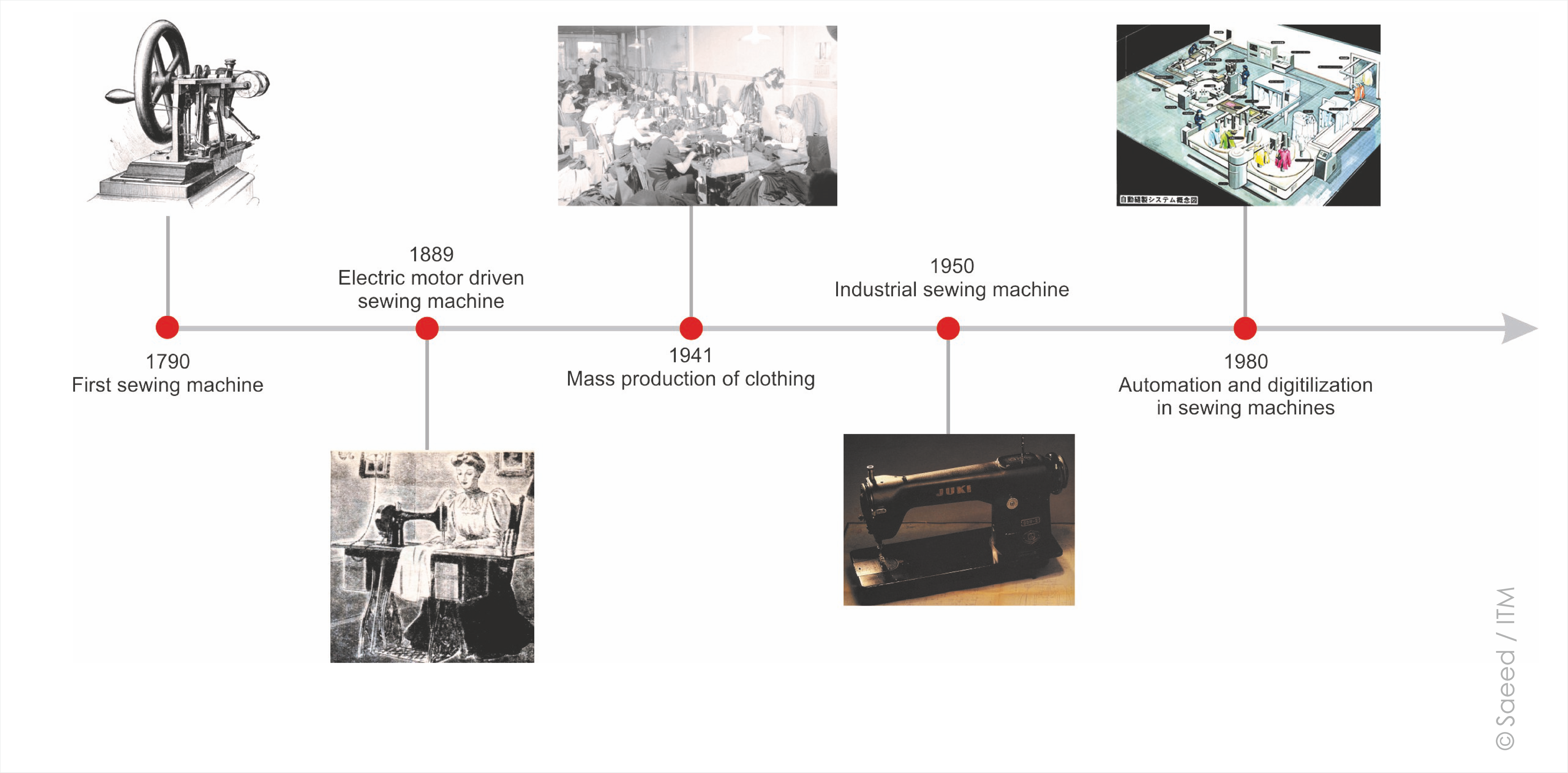
History of sewing
The innovations in sewing technology in the 20th century with ever increasing sewing speeds led to the realization of mass production for the clothing industry. The industrial sewing machine became more robust and specialized industrial versions were capable of working at much higher sewing speeds compared to their earlier versions. The combination of advanced automation technology and higher sewing speeds were utilized for mass production of goods and reduced the intensive labor work. The industrial sewing machines today can run up to 8000 stitches/minute. This is an enormous increase in speed for a needle motion law which was originally designed by the inventors in the 18th and 19th century.